Wüsthof Classic 8-Inch Chef Knife
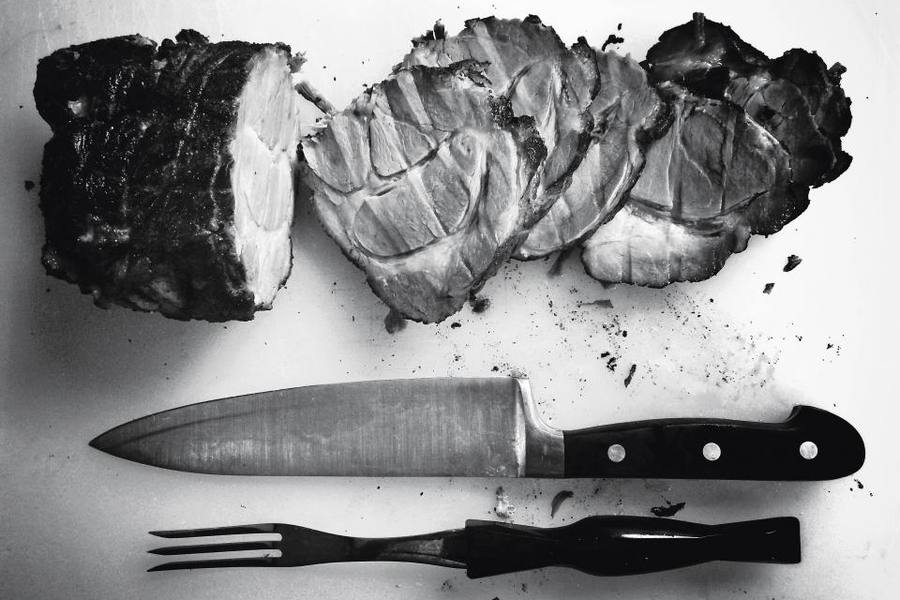
Symbolbild (Stockfoto); nicht das abgebildete Produkt.
Forged Rather Than Stamped
A forged knife is made from a single billet hammered into shape, which allows a thicker spine, a full tang running the length of the handle, and a bolster where the blade meets the handle. The result is a heavier knife with a different balance from a stamped blade.
That weight is the point for many cooks. A heavy knife falls through soft food under its own momentum, requiring less downward force, and the mass damps vibration so the cut feels smoother and more controlled.
It also feels substantial in a way that matters to people who cook daily. This is a subjective benefit and it is a real one, and it is a large part of why forged German knives remain the default in home kitchens.
The Full Bolster Question
The Classic has a full bolster — the thick collar between blade and handle extends all the way down to the heel of the edge. This is traditional and it is genuinely divisive.
The advantage is a comfortable pinch grip and a reinforced blade at its most stressed point. The disadvantage is that the last centimetre of edge at the heel cannot be sharpened on a stone without grinding away the bolster, so over years of sharpening the heel develops a recurve while the rest of the blade wears back.
Wüsthof also sells half-bolster versions which avoid this entirely, and anyone who intends to sharpen the knife properly for decades should consider one of those instead. It is the single most useful thing to know before buying.
Steel And Maintenance
The steel is a mid-hardness stainless that holds an edge noticeably longer than a Victorinox and considerably less long than a hard Japanese steel. It is a deliberate middle position, and it is forgiving.
It is tough enough to tolerate being used on bone-adjacent work and contact with a board edge without chipping, which harder Japanese blades will not always survive. For a single knife doing everything in a busy kitchen, that toughness has real value.
Honing between sharpenings keeps the edge aligned and should be done regularly. Sharpening on a stone every few months is enough for most home use, and the knife is built to survive that for decades.
Against The Alternatives
Against a Victorinox, this holds an edge longer, feels far more substantial and costs several times as much, with real-world cutting performance that is closer than the price gap suggests.
Against a Japanese gyuto, the Wüsthof is heavier, tougher and easier to live with, and clearly behind on sharpness ceiling and on thin, clean cutting.
Against a full knife block set, buying one good chef knife, one paring knife and one bread knife covers almost everything a block does, usually for less money.
Who Should Not Buy It
Anyone who prefers a light knife will find the weight tiring rather than helpful; this is a genuine preference split and worth testing in a shop.
Anyone who will sharpen it on a stone for decades should buy the half-bolster version instead.
Anyone wanting maximum sharpness for fine vegetable work should look at a Japanese blade.
The Verdict
The forged German standard, and it earns the position: tough, balanced, satisfying to use, and built to be sharpened for decades rather than replaced.
The full bolster complicates long-term sharpening, the weight will not suit everyone, and it costs several times a Victorinox that cuts nearly as well.
If you intend to sharpen it properly for thirty years, buy the half-bolster version — that decision matters more than anything else about the knife.
Auf einen Blick
Vorteile
- Forged construction with full tang and substantial balance
- Weight helps the knife fall through soft food
- Tough steel tolerates board contact without chipping
- Built to be sharpened for decades
Nachteile
- Full bolster prevents sharpening the last centimetre of edge
- Heavy weight will not suit all cooks
- Edge retention behind hard Japanese steels
- Several times the price of a Victorinox that cuts nearly as well
Häufig gestellte Fragen
What is wrong with a full bolster?
It extends to the heel of the edge, so the last centimetre cannot be sharpened on a stone without grinding the bolster away. Over decades the heel develops a recurve. Half-bolster versions avoid it entirely and are the better choice for anyone who sharpens properly.
Is it worth the money over a Victorinox?
For feel, weight and edge retention, yes. For pure cutting performance the gap is smaller than the price difference. If the money matters, a Victorinox and a good whetstone will out-cut this knife left unsharpened.
Wüsthof or a Japanese gyuto?
This is tougher, heavier and more forgiving of board contact and awkward tasks. A gyuto is thinner, sharper and cuts more cleanly, and it chips if misused. One knife doing everything favours the German; a careful cook doing fine work favours the Japanese.
Spezifikationen
| Construction | Forged, full tang |
| Blade length | 8 inches |
| Bolster | Full (half-bolster versions available) |
| Steel | Mid-hardness stainless |
| Weight | Heavy |
| Toughness | High; resists chipping |
| Maintenance | Hone regularly; stone every few months |
| Expected life | Decades |
Fazit
The forged German standard, built to be sharpened for decades. Buy the half-bolster version if you will use a stone — that decision outweighs everything else.
Preis auf Amazon prüfen